Manage case materials – usability testing and iteration
Next design iteration
Based on findings from usability testing with operational delivery colleagues and follow‑up research with lawyers, we iterated the manage case materials designs to address specific usability risks and downstream legal needs.
These changes focused on improving navigation, confidence, and efficiency when working at scale.
Changes informed by operational delivery research
Introducing a tree structure for copy and move
To address the navigation issue with copy and move, we introduced a tree structure when copying or moving materials.
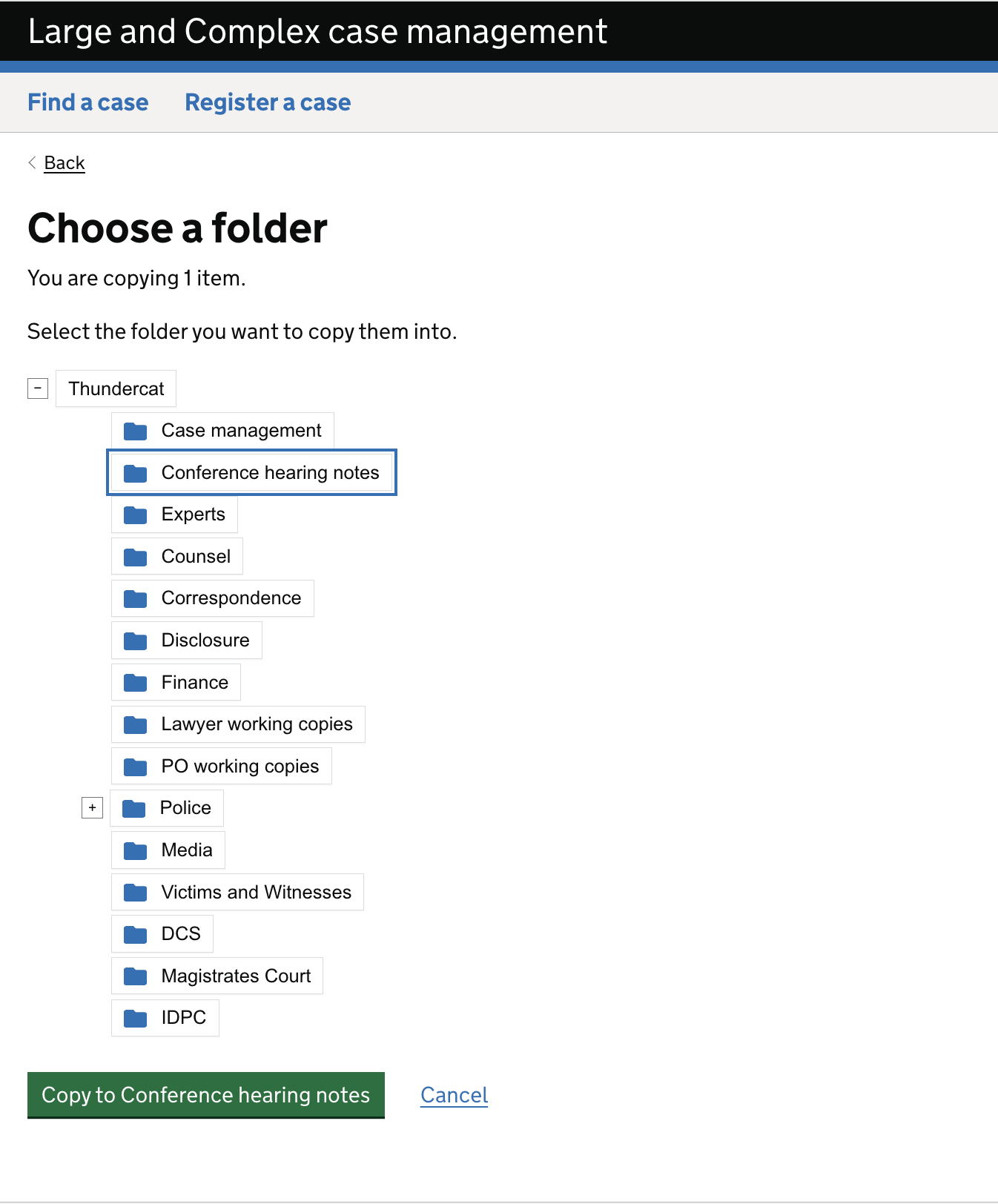
This change:
- makes the destination context explicit during the action
- removes reliance on breadcrumb navigation mid‑task
- mirrors users’ mental models from shared drives and file explorers
- reduces the need for multi‑step workarounds
This iteration directly addresses a critical usability risk identified in round one testing.
Search as a primary tool for locating materials
To address this, search was moved into a reveal at the top of the materials view, separate from filters.
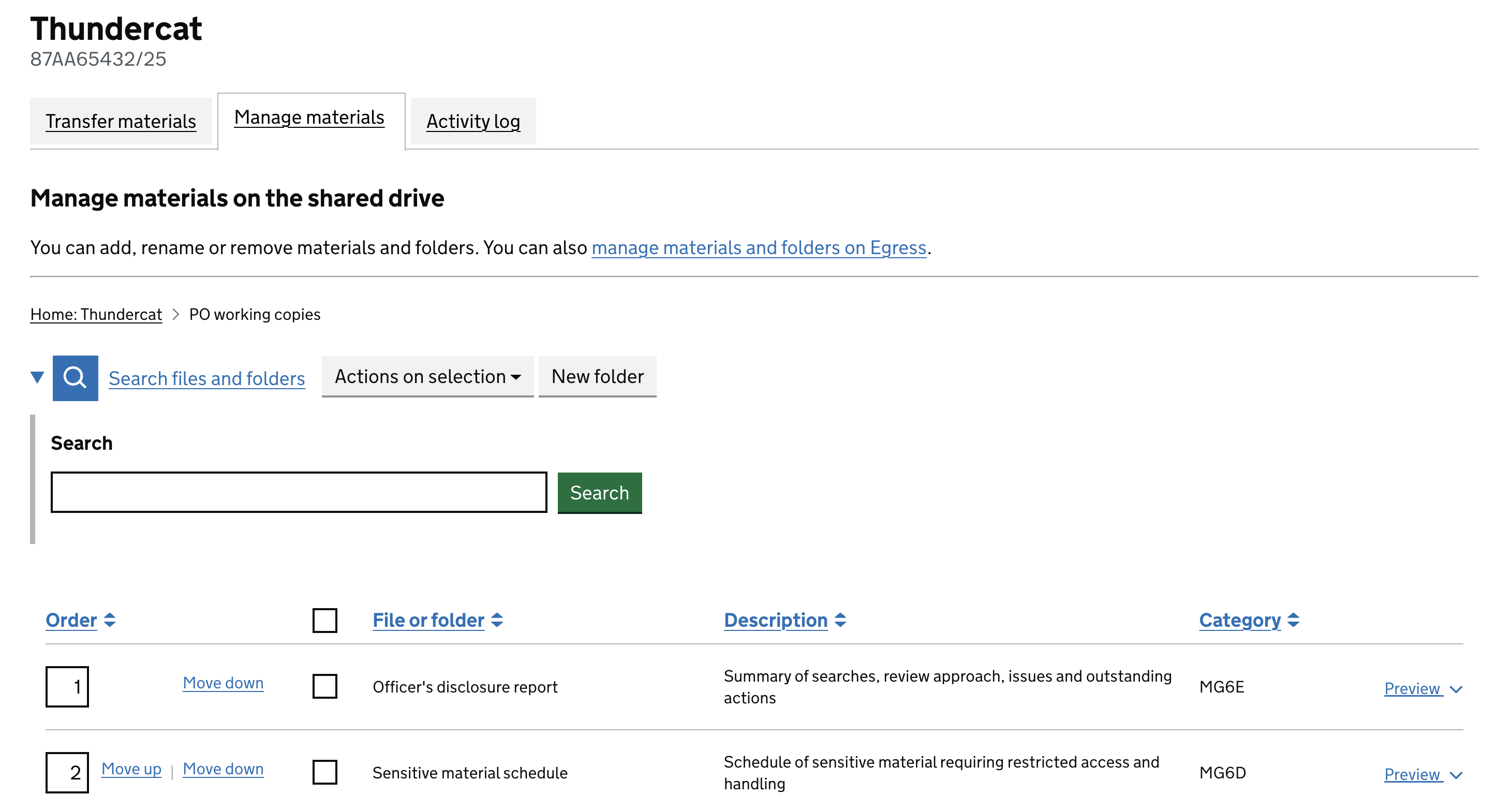
This change:
- increases the prominence of search without overwhelming the interface
- aligns with users’ expectation that search is a quick, on‑demand action
- reduces visual competition between search and filtering
Changes informed by research with lawyers
Supporting multiple file rename
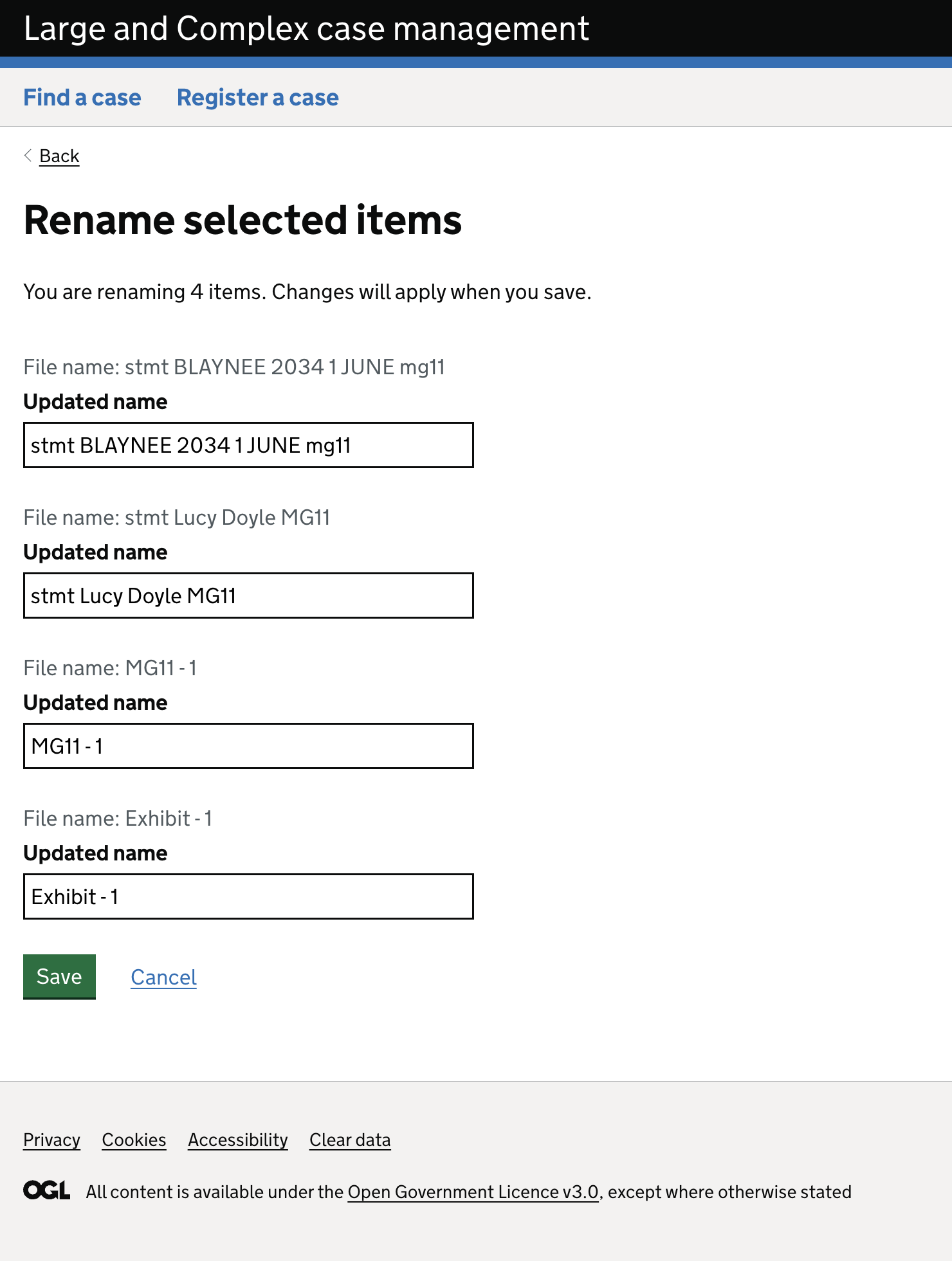
This change:
- supports bulk administrative tasks common in legal workflows
- reduces time spent on repetitive actions
- aligns the service more closely with how lawyers prepare and review materials
Sorting files up and down the list
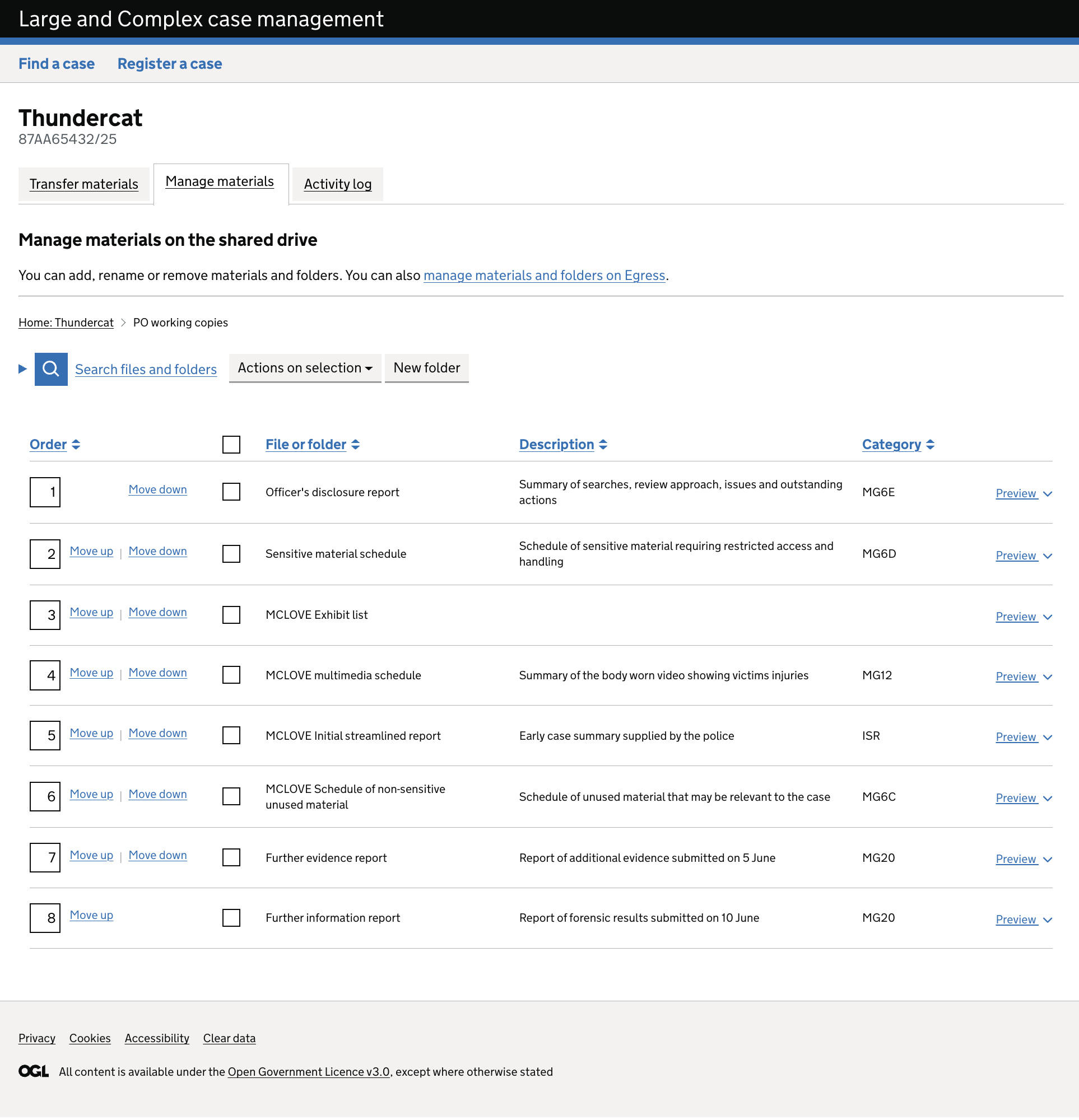
We have introduced the ability to sort files up and down the list, allowing users to reorder materials directly.
This supports:
- sense‑making during review
- preparation for hearings or disclosure
- personal and role‑specific ways of working
Removing numbers from item names
This change:
- decouples ordering from naming
- reduces the need for repeated renaming
- allows users to reorganise materials without introducing inconsistency
Next steps
We will now test these design iterations in a second round of usability testing with caseworkers and paralegals.
This round will focus on:
- testing the revised search placement
- assessing the effectiveness of the new tree structure for copy and move
- confirming that changes reduce navigation and confirmation issues
- ensuring the designs support confidence and efficiency
Findings from this round will inform any further iterations before progressing the designs.